Back to home page
-

love what you eat: supporting your teen.

Simple ways to support healthy eating, food confidence and independence
Want to have this resource handy?
Printing or saving this page as a PDF is just a click away

Simple ways to support healthy eating, food confidence and independence

The teenage years bring lots of changes, and it’s common for your teen’s eating habits and patterns to change too. As your teen grows, they’re becoming more independent and making more of their own food choices at home, school, with friends, or at work. Sport, study, busy schedules, social media, and friends can all influence what, when and how they eat.

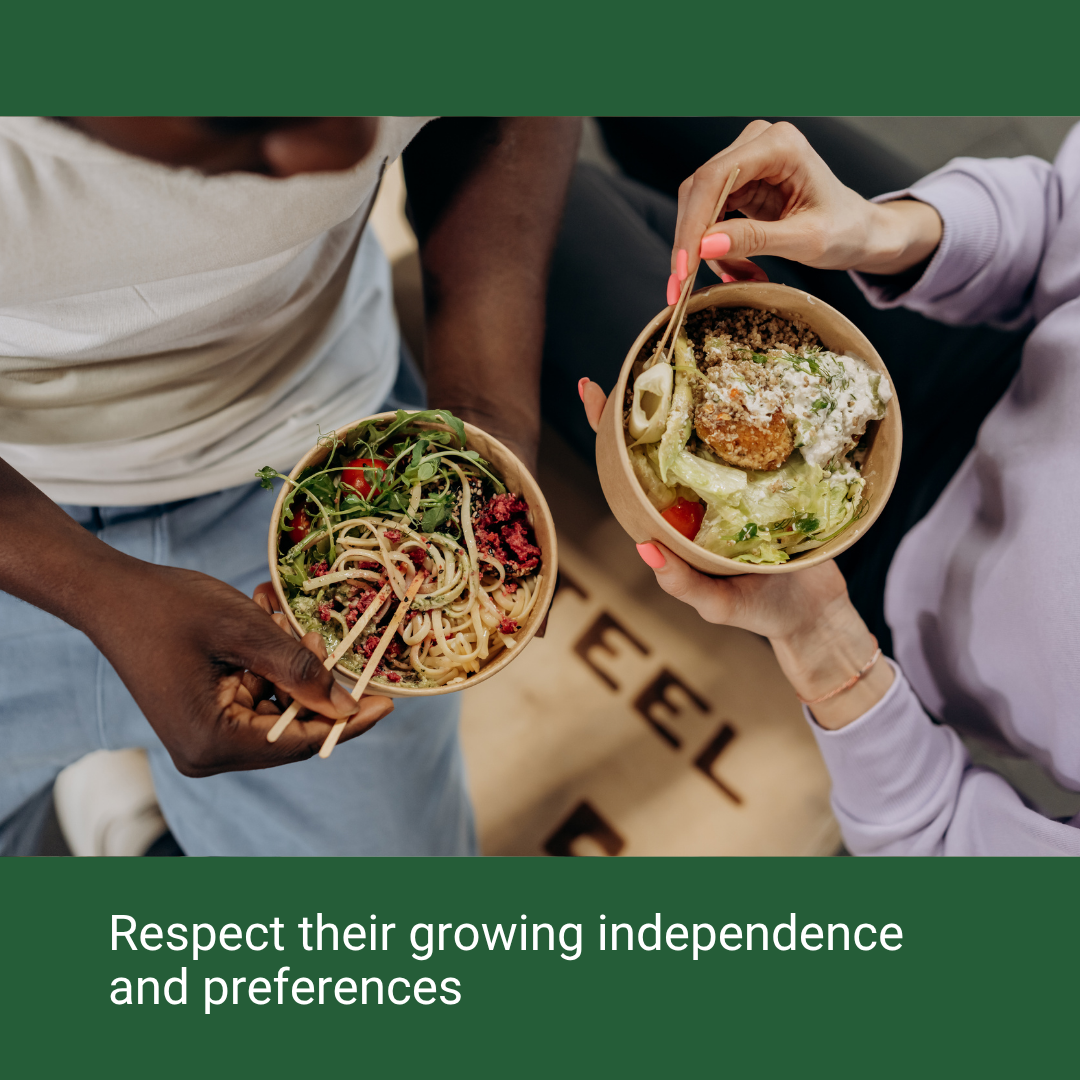
You might notice their appetite and preferences changing. Some days they seem hungry all the time; other days they barely seem interested in food. They may reject foods they used to enjoy or become interested in new foods. They may also make choices you wouldn’t necessarily make.

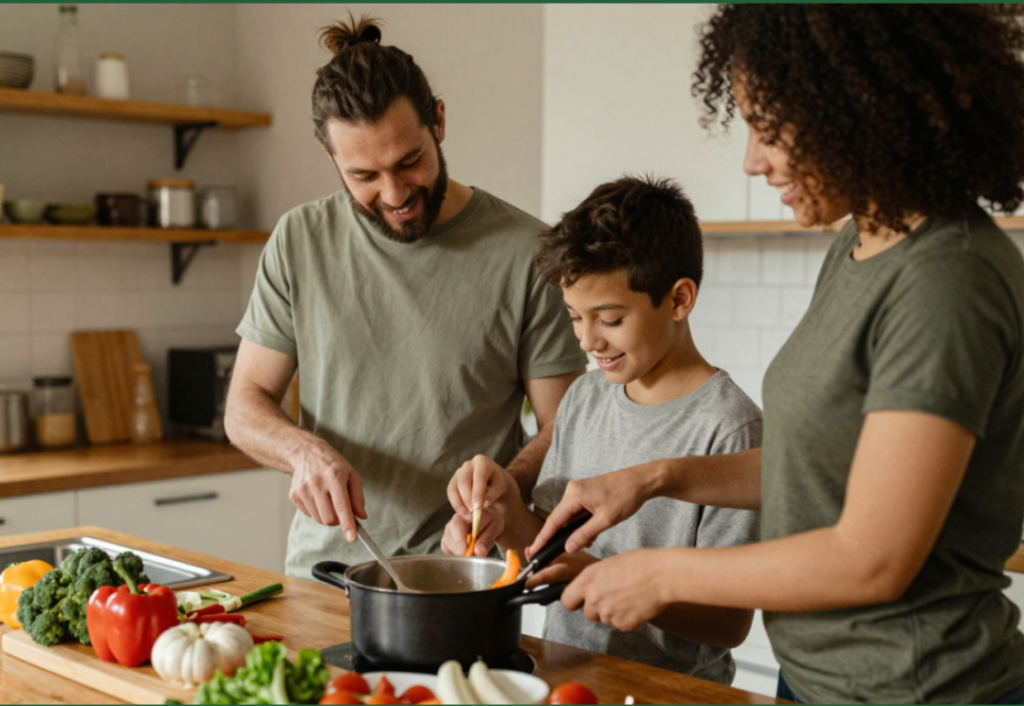
These changes can be challenging for parents, but they’re a normal part of becoming more independent. A supportive food environment at home can make a difference by providing access to nourishing food, opportunities to cook and eat together, and chances to build practical food skills for life.

Over time, these everyday moments are opportunities to connect, encourage problem-solving and supporting your teen to listen to their body, enjoy food, and make choices that work for them.
Your role is changing from gatekeeper to guide

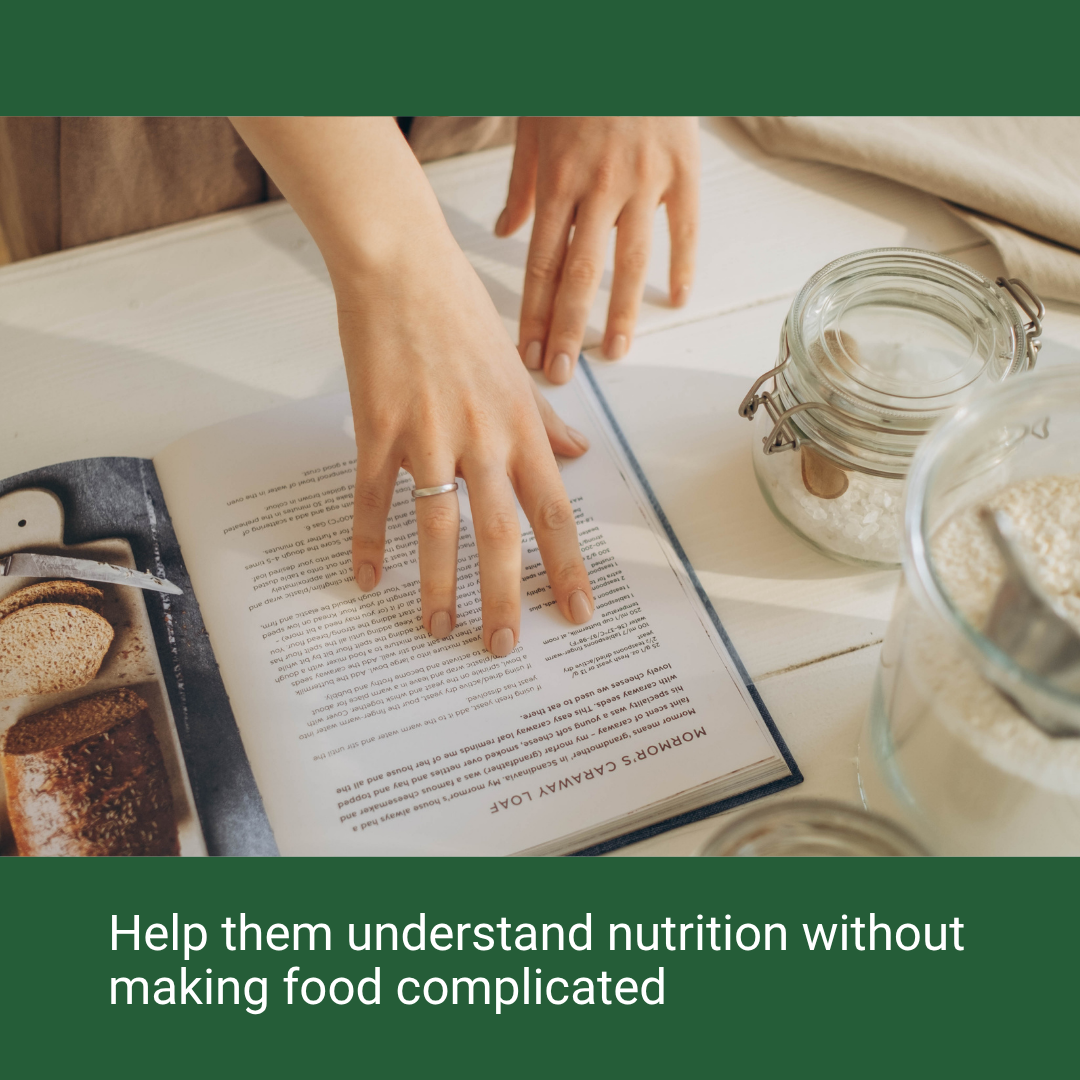
As your teen becomes more independent, you may find yourself having fewer opportunities to influence what they eat directly. Instead, focus on creating the skills and confidence they need to make food choices for themselves.

Simple ways to help your teen love what they eat:

Creating a supportive food environment for teens

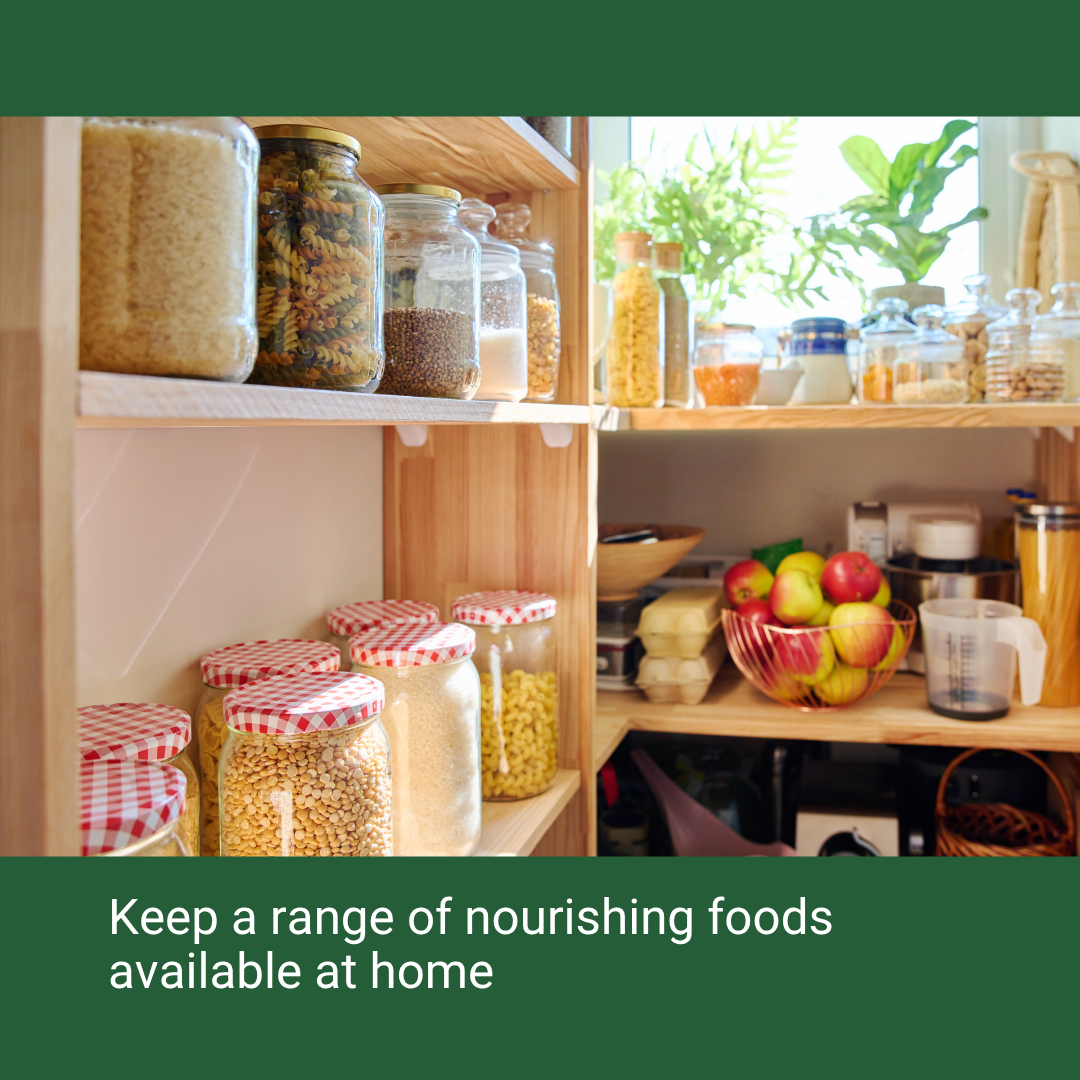
One of the most helpful things you can do as a parent/carer is create a home environment where nourishing food is available, accessible and easy to prepare.

Teenagers lead busy lives. Between school, study, sport, work and socialising, they might come home hungry and need something they can grab quickly. If nourishing options are easy to see and easy to eat, they’re more likely to become part of everyday eating.

Make nourishing meals and snacks easy to assemble

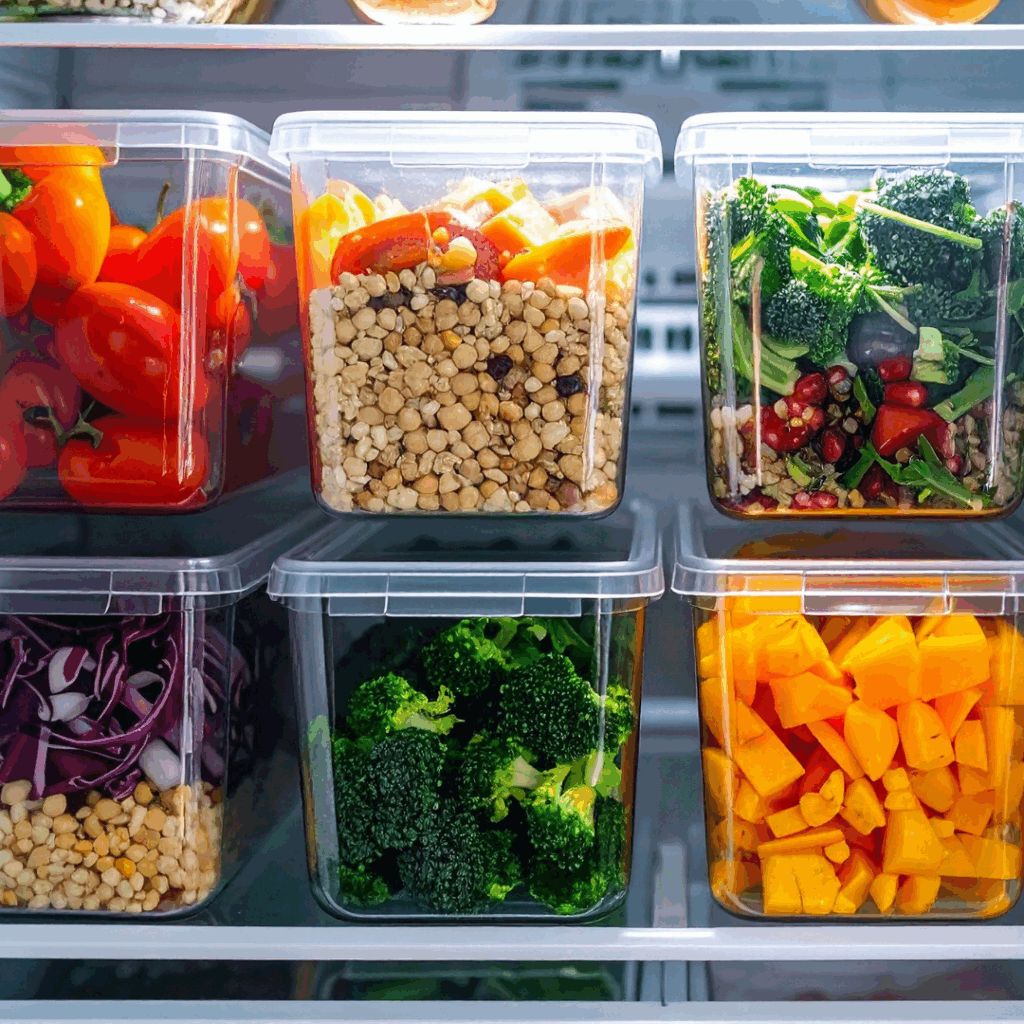
Keep a few simple options on hand, and on repeat in your grocery order, that your teen can reach for without needing to ask or wait for someone to prepare them.
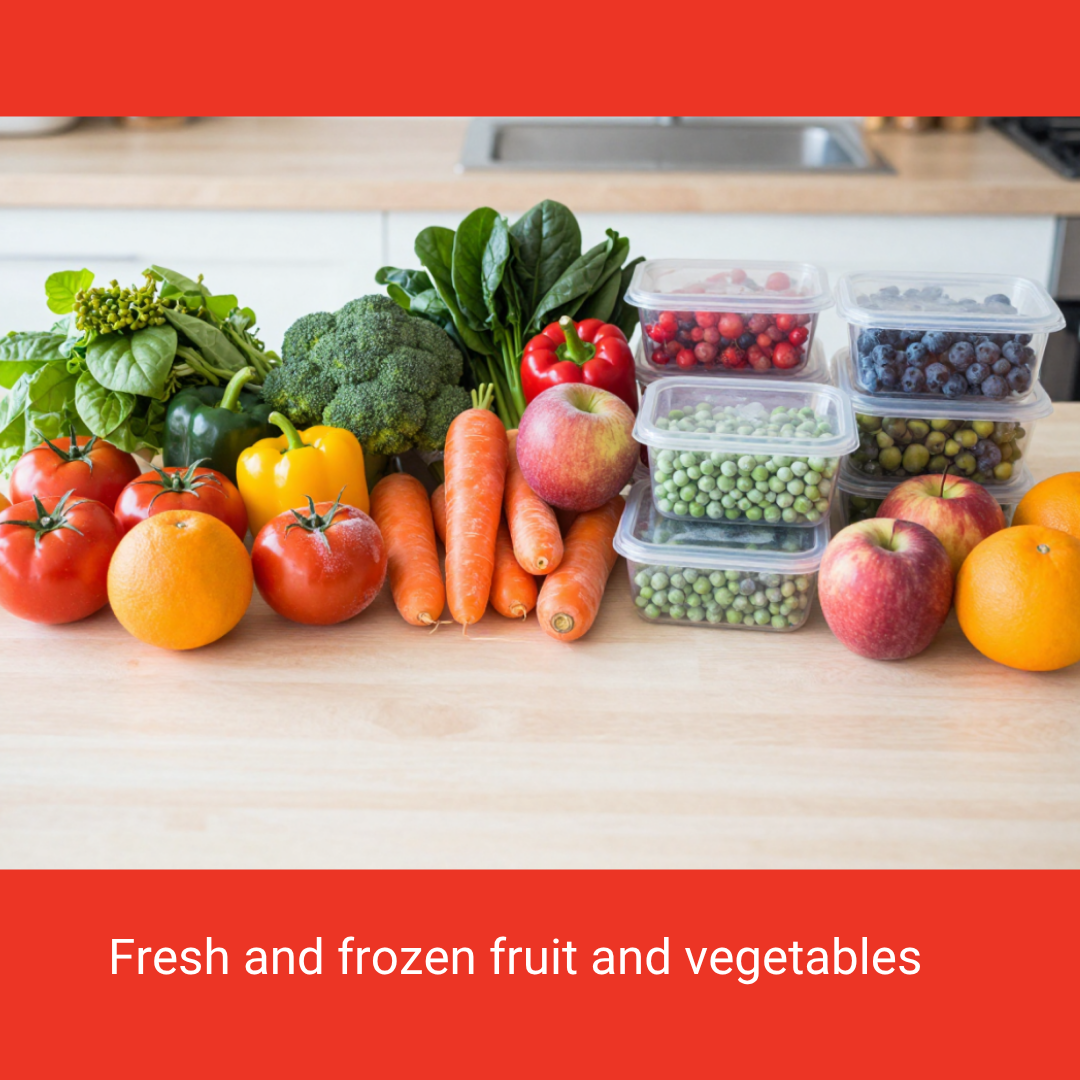
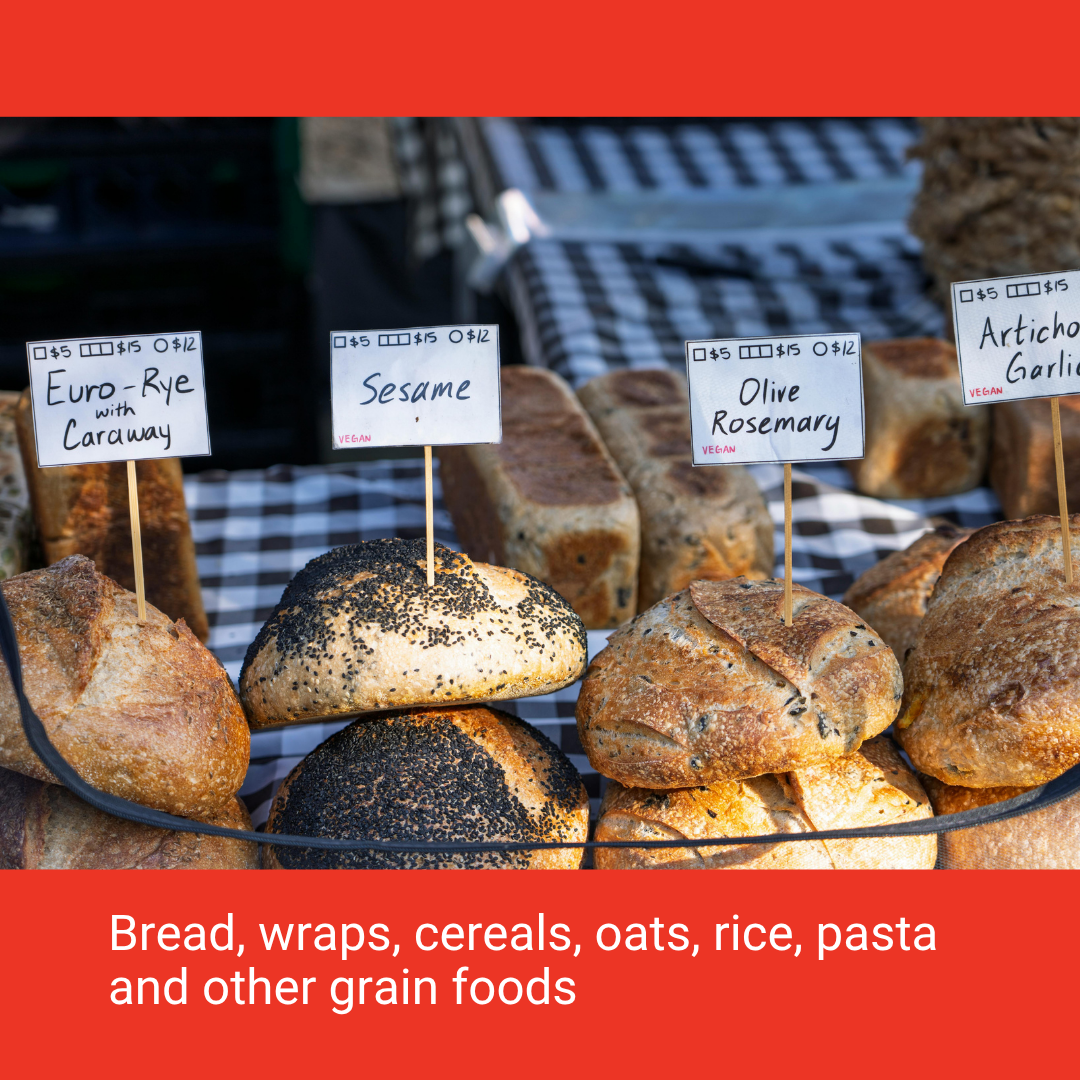
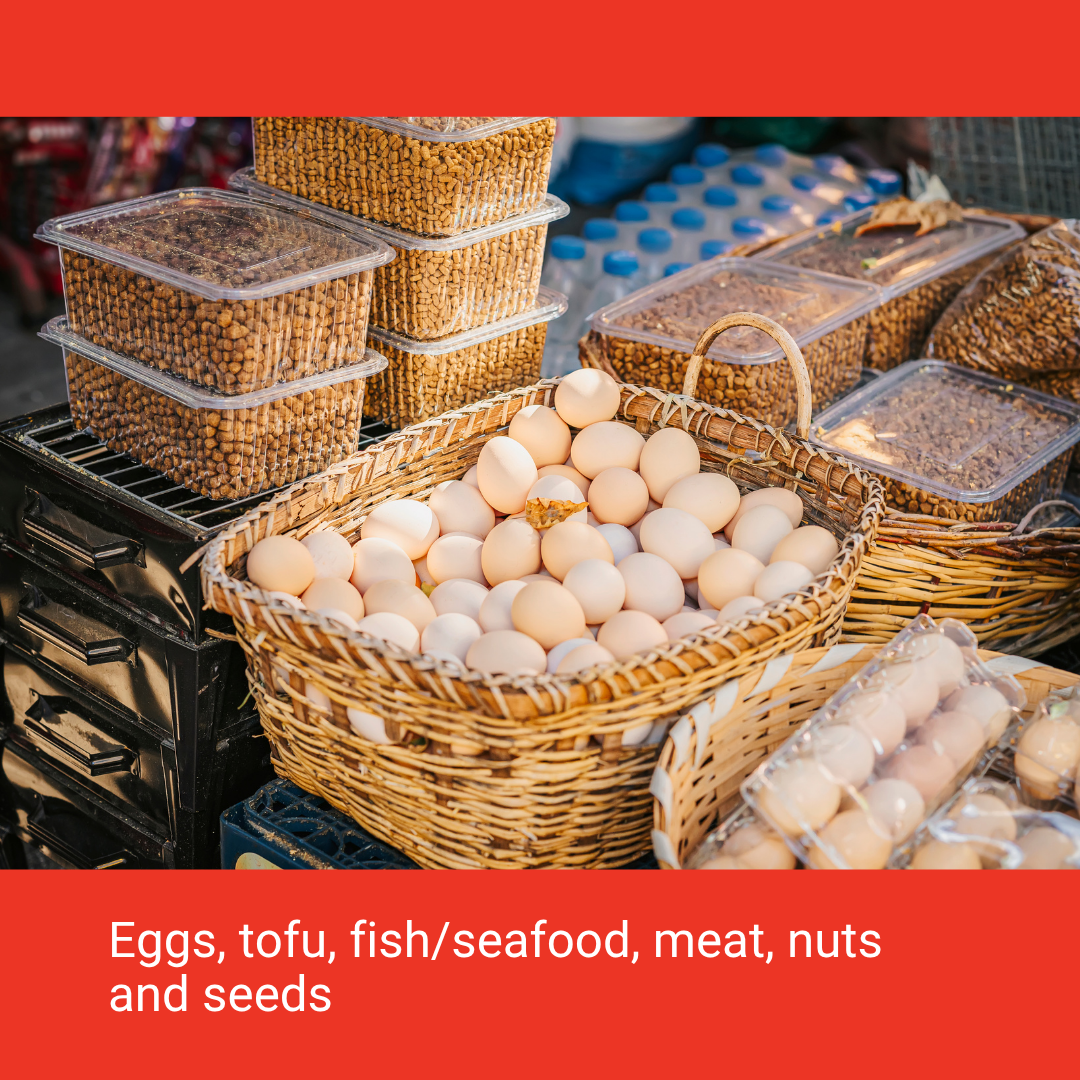
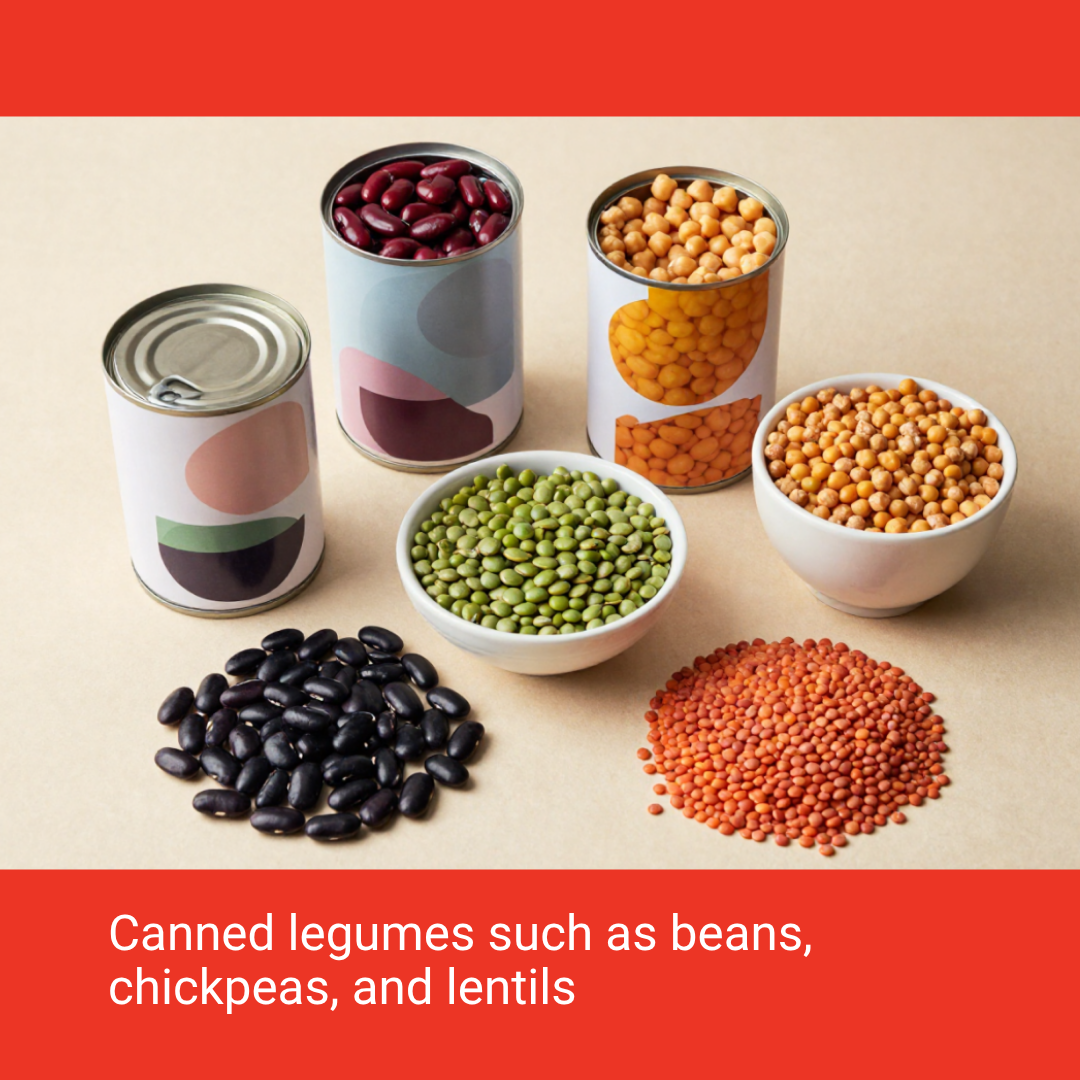
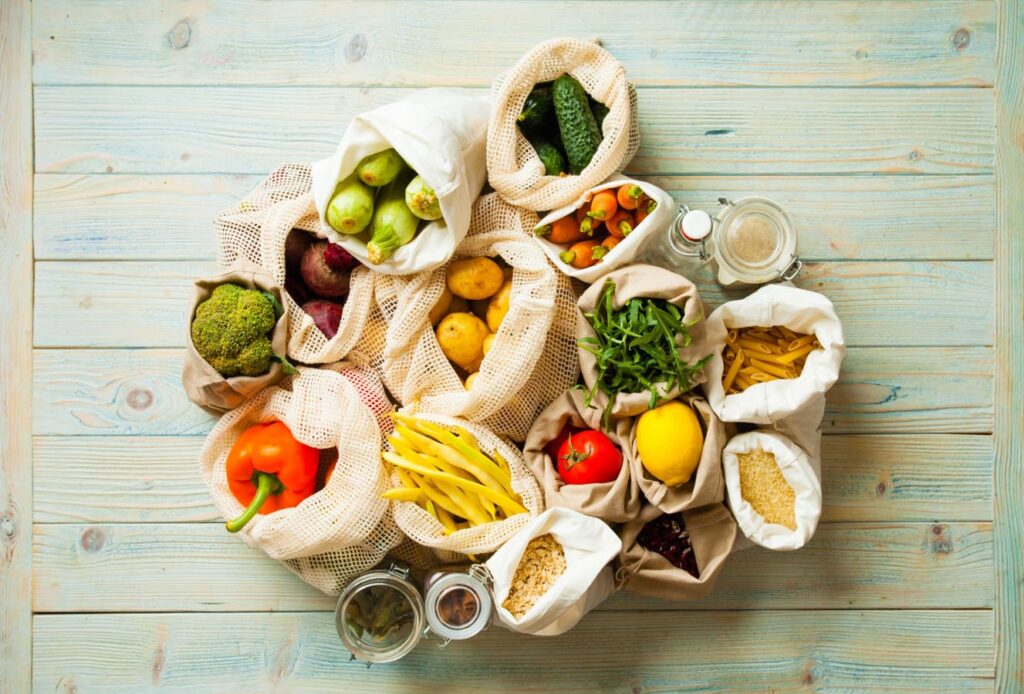
Stock the fridge and pantry with:

Convenience matters

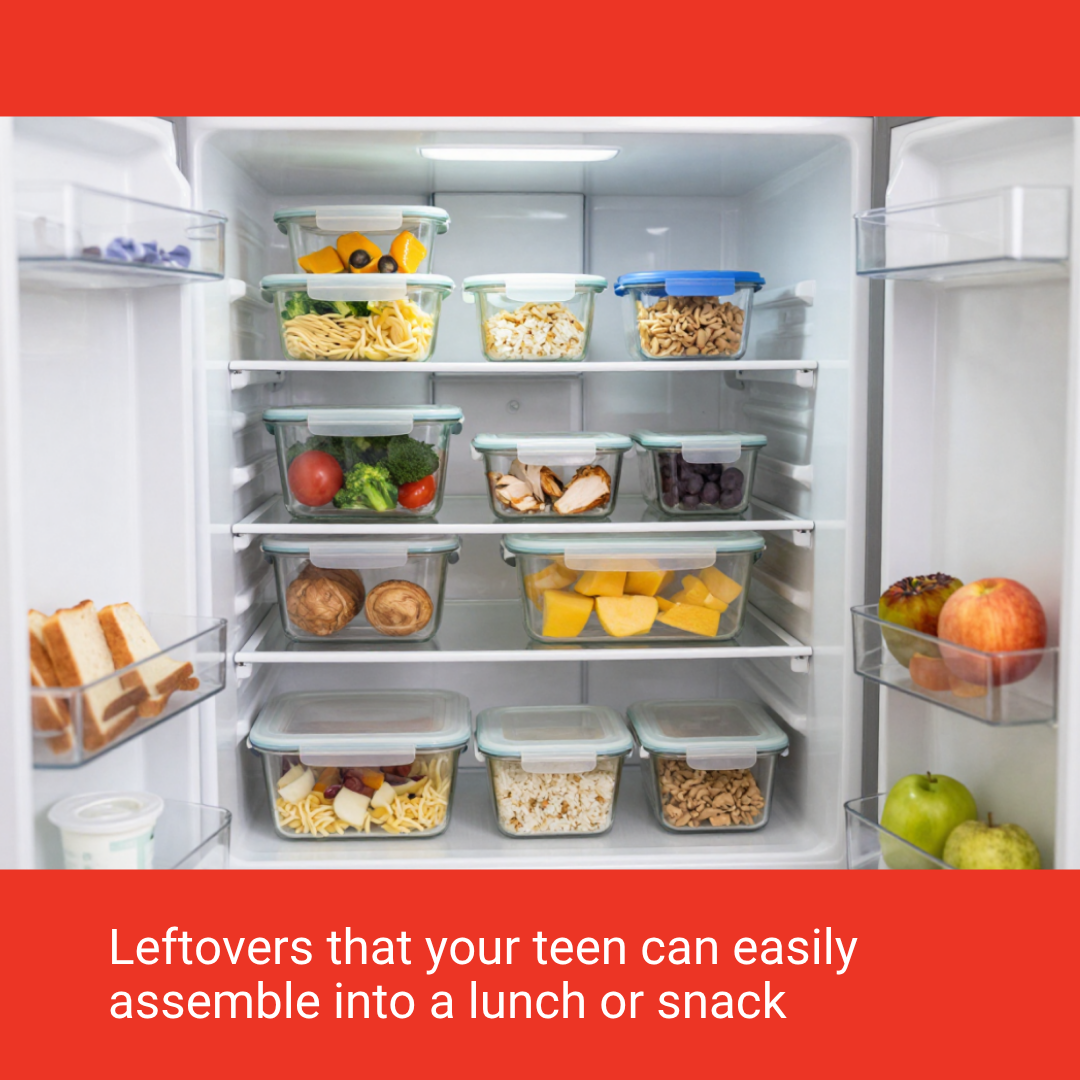
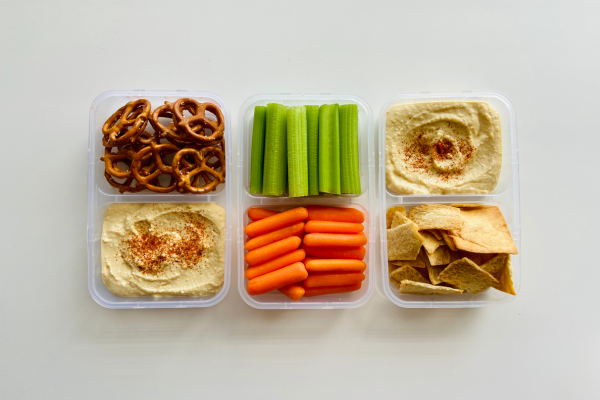
Keep storage containers visible in the fridge with foods that teens can easily assemble into meals such as:

  • pre-washed/cut fruit
  • veggie sticks/roast veg
  • sliced/cubed cheese
  • boiled eggs
  • pre-cooked chicken or salmon.

Handy shortcuts like frozen fruit and vegetables, canned bean mixes and microwave rice can also make nourishing meals on-the-go when time is tight.

Give your teen some ownership

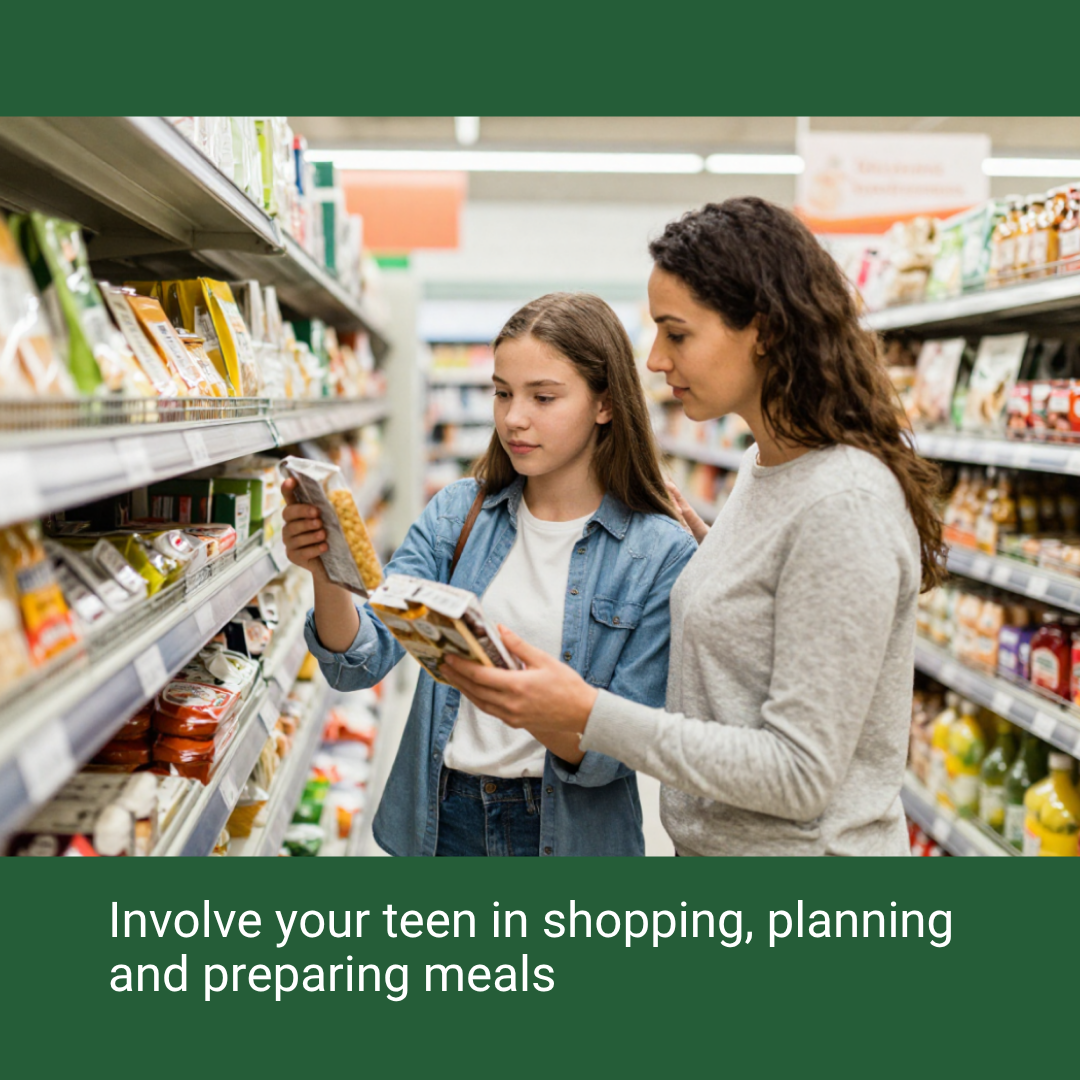
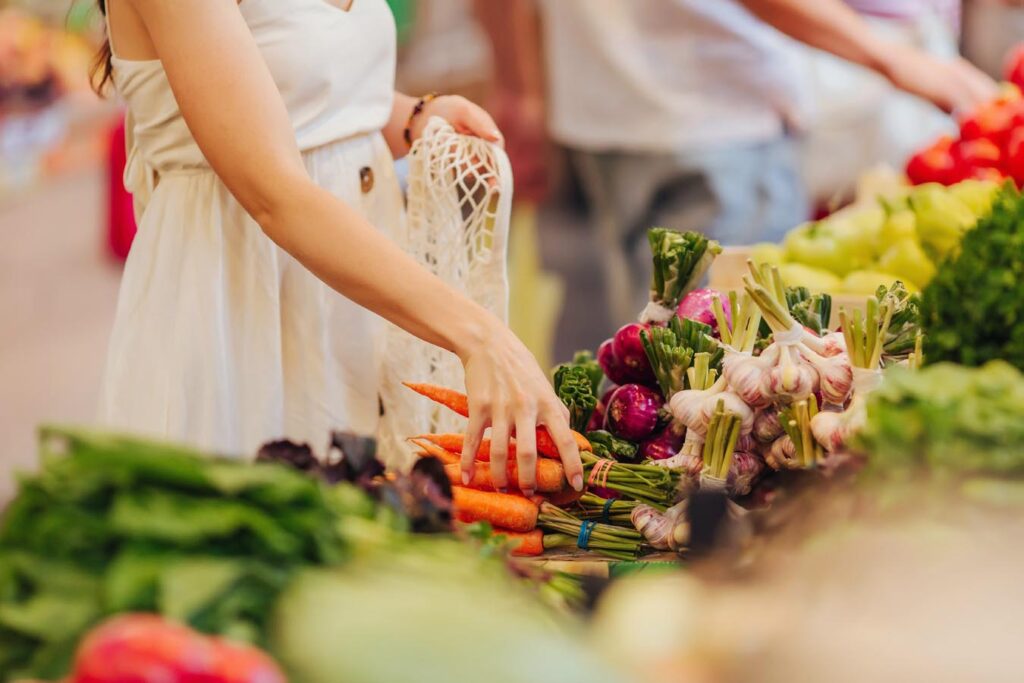
Invite your teen to help decide what food to stock the fridge or pantry with. You could ask: “What would make it easier for you to feed yourself when you’re hungry?” Their answer might be simple, such as more breakfast options, food they can take to school, or ingredients for a favourite meal.

Giving them some ownership helps them practice making decisions about food in a supportive environment. You could go one step further by giving them a small budget to shop for a few foods for the week or letting them choose a weekly meal for the family.

Helping teens build confidence in the kitchen

As a busy parent of a teen, planning, shopping for and preparing meals is already a large part of your mental load. Both you and your teen are short on time, you have a grocery budget to stick to and may be catering to different food preferences and allergies or intolerances for certain family members. It’s no wonder encouraging your teen to help you cook, let alone take over cooking for one night a week, can be a challenge.

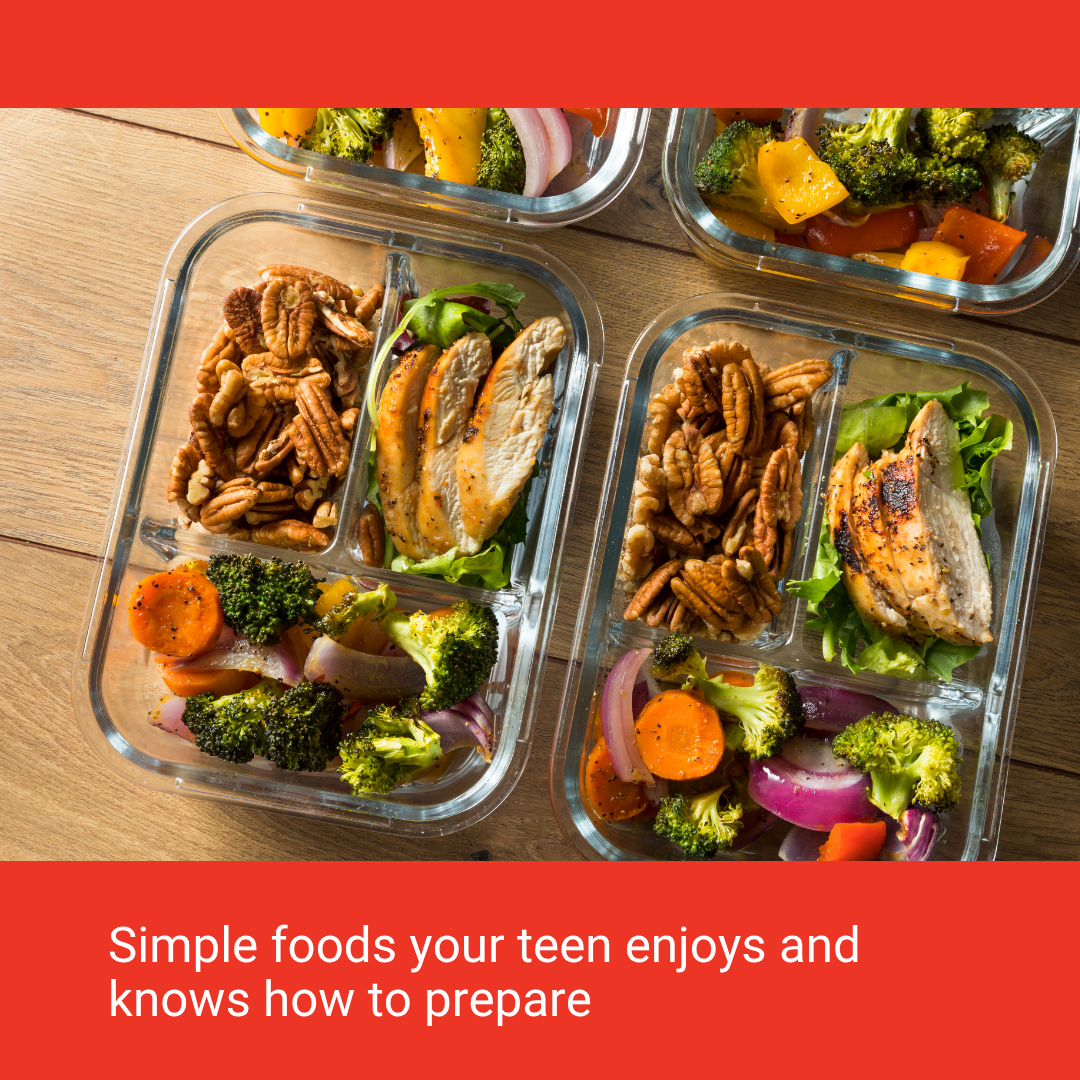
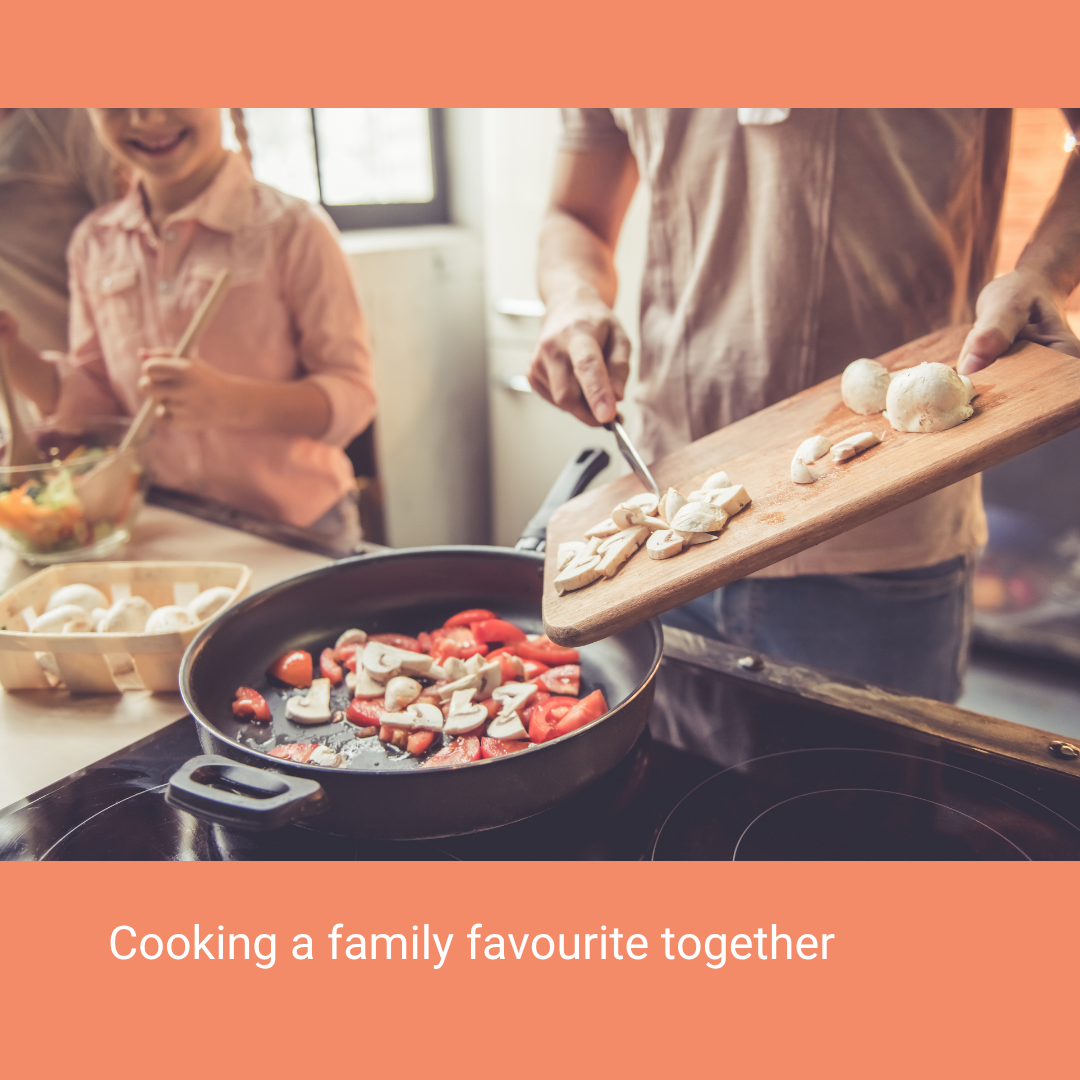
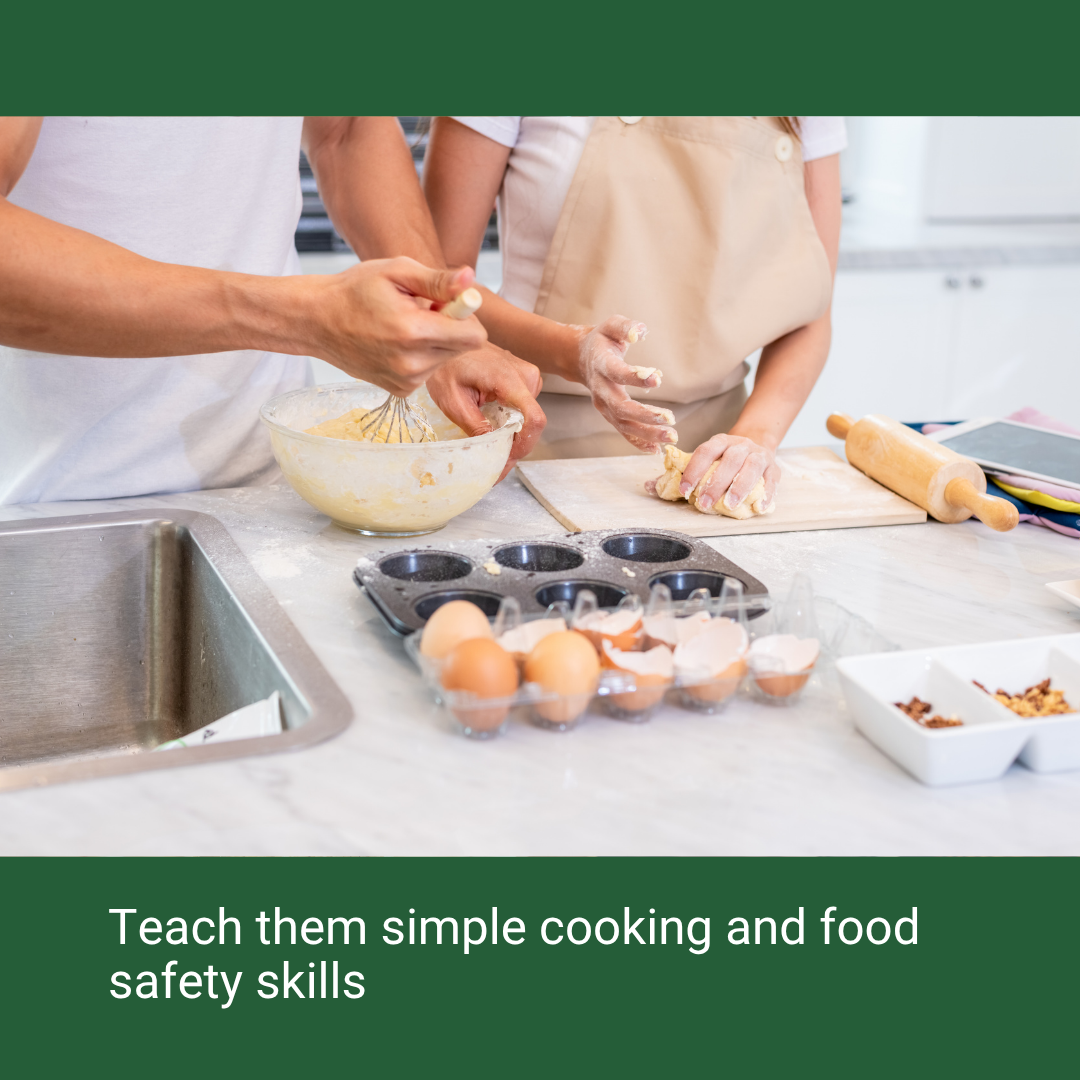
Start with these practical steps:


Teen kitchen takeover challenge (5 MB)

Modelling positive food talk

A supportive environment is about more than what’s in the fridge. Mealtime experiences and the way your family talks about food matters too.

Talk positively about what food can do for your teen, whether it’s helping them grow, learn, concentrate, play sport, have energy, or enjoy time connecting with others.

Modelling positive attitudes towards food and bodies by eating a variety of foods yourself, taking the time to enjoy meals as a family, and trying new things can all help model a positive relationship with food.

Changing appetites and preferences

During puberty, teenagers experience rapid growth and development and they can experience changes in their appetites. Regular meals filled with energy, protein, healthy fats, vitamins and minerals help support growing muscles, bones and brains.

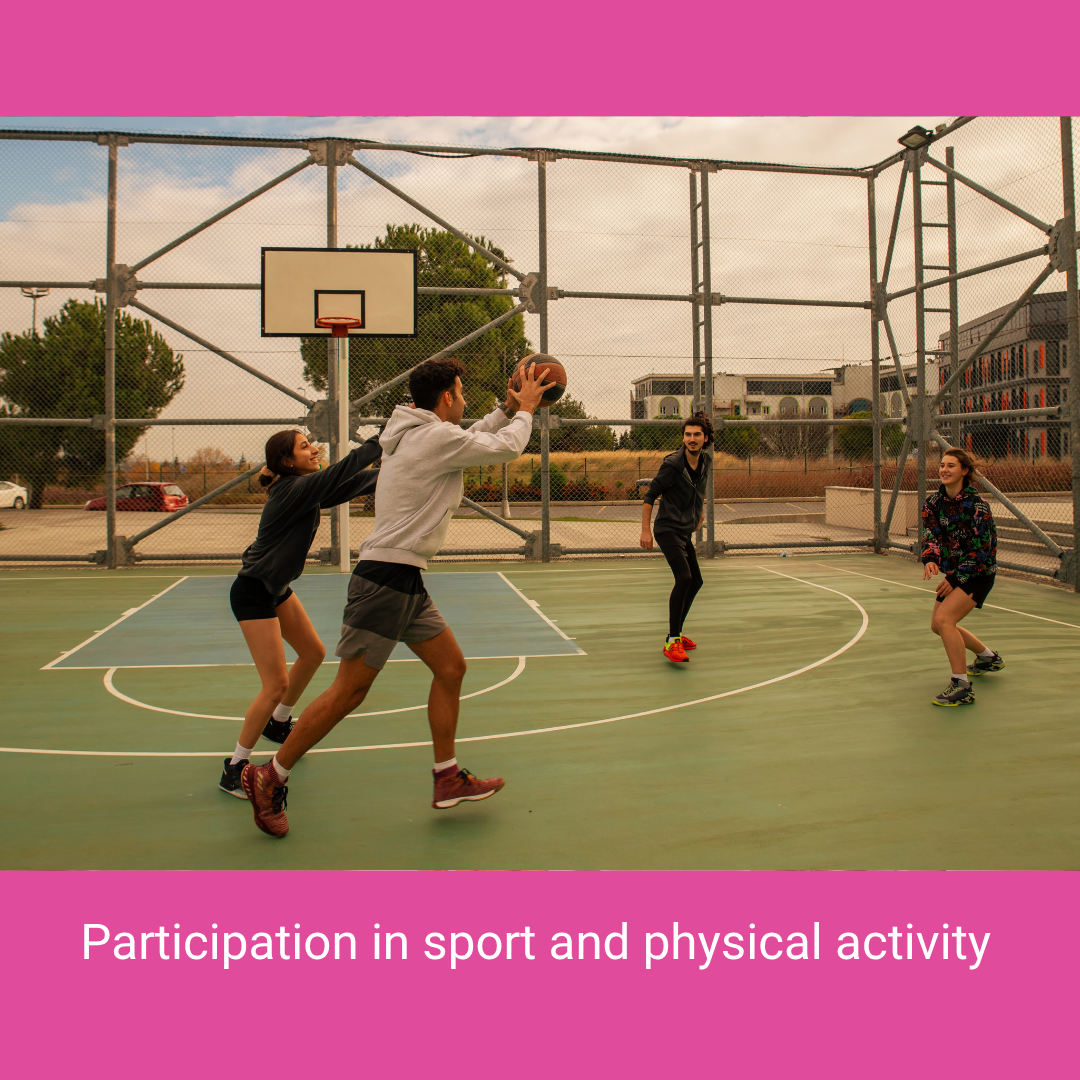
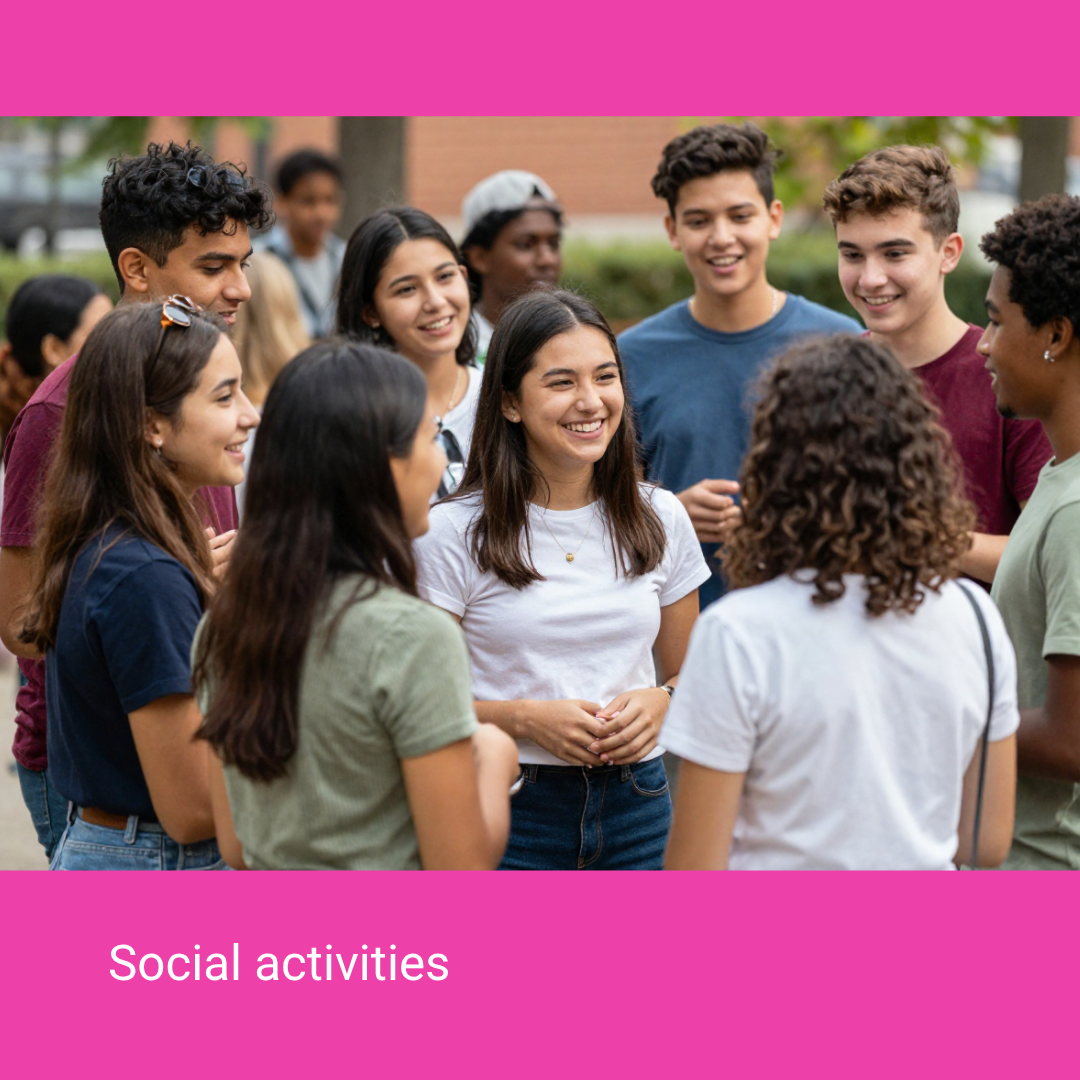
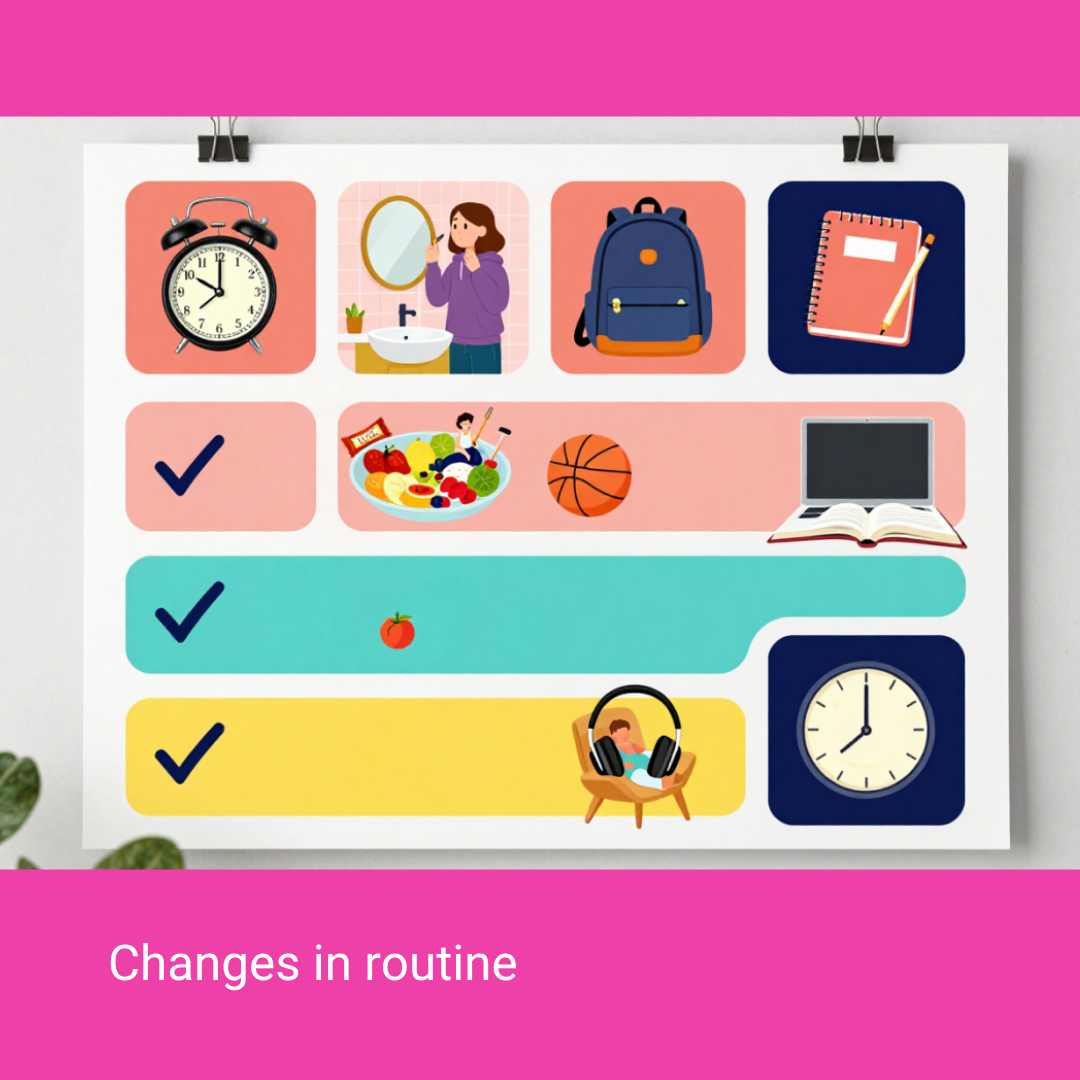
Other factors that can influence appetite and hunger in teens include:

How to support your teen through this time:

Creating, sharing, and celebrating through food

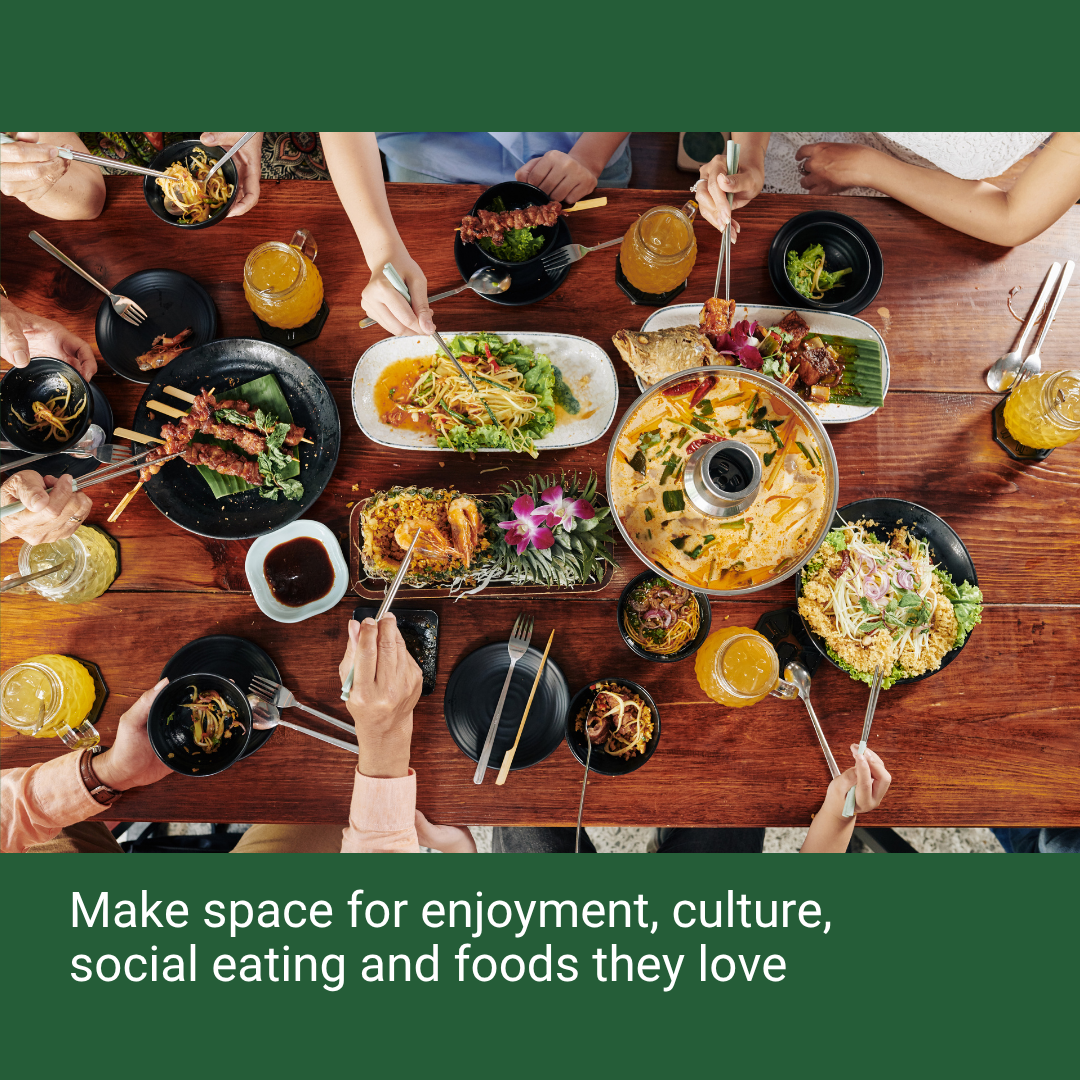
For teenagers, food can be a way to connect with family, culture, identity, memories and community. Sharing the foods, traditions and rituals that are meaningful to your family can help your teen develop a positive relationship with food while giving them a sense of belonging. This could be cultural, religious or seasonal food rituals, or even recipes and mealtime traditions that have been passed down through generations.

Make food a shared experience

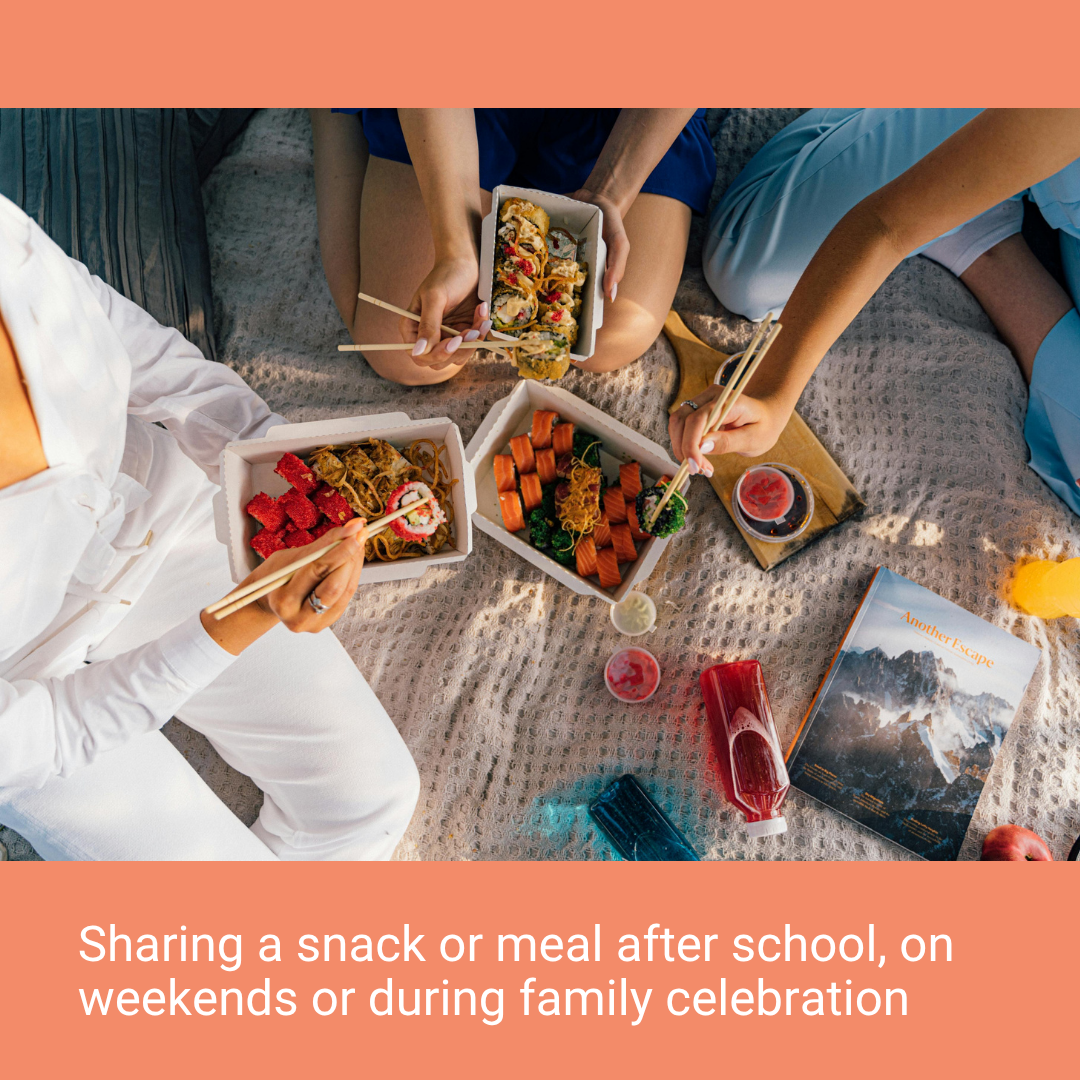
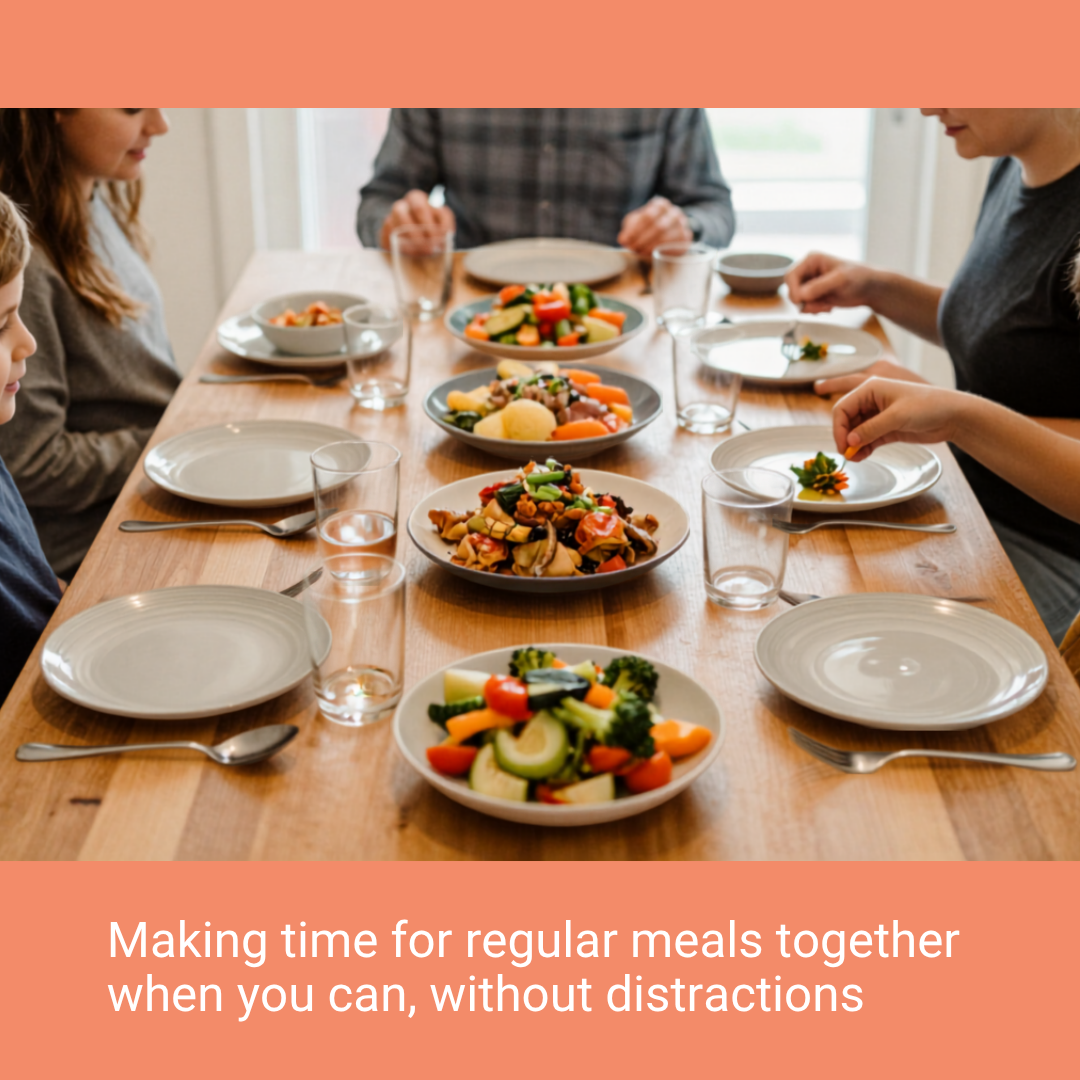
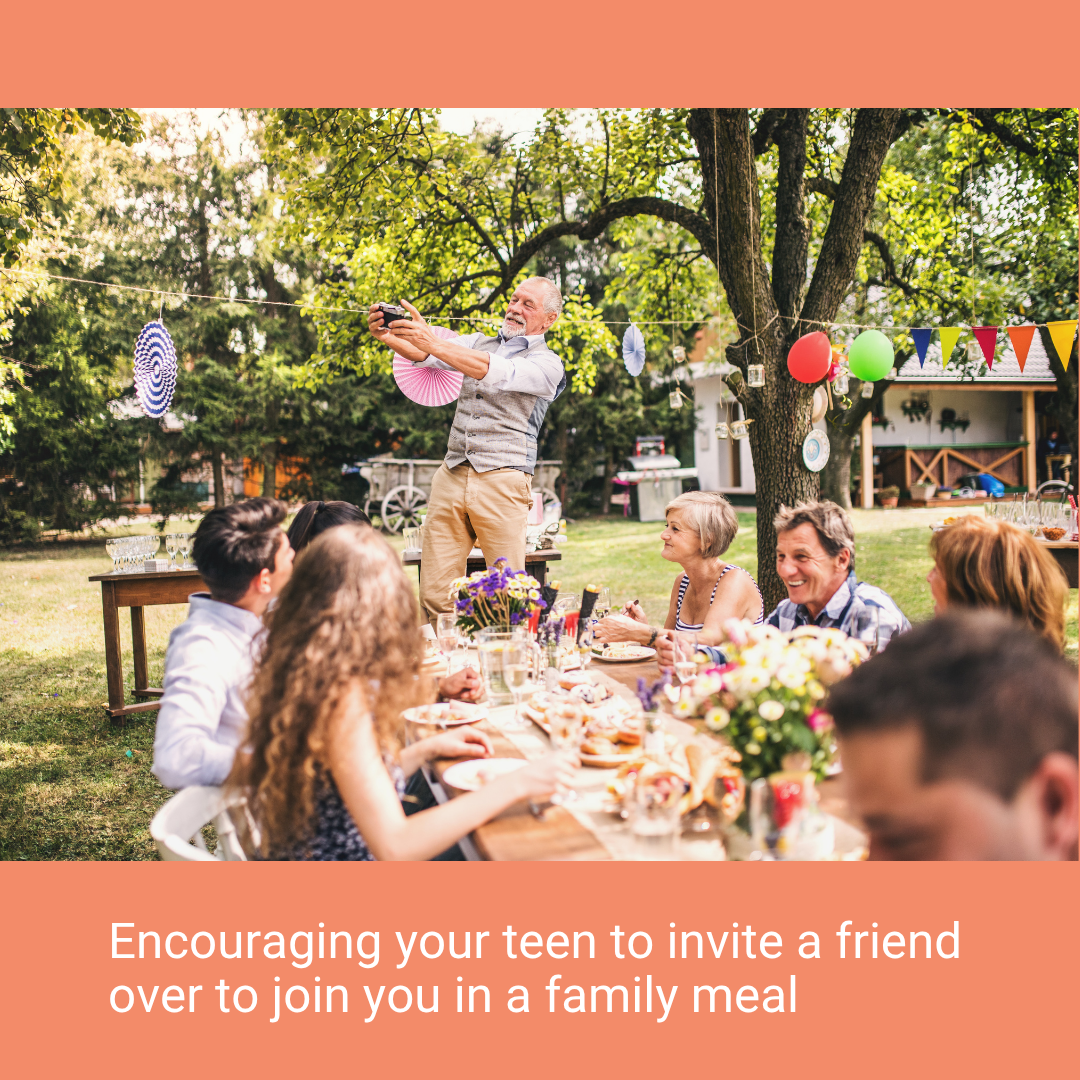
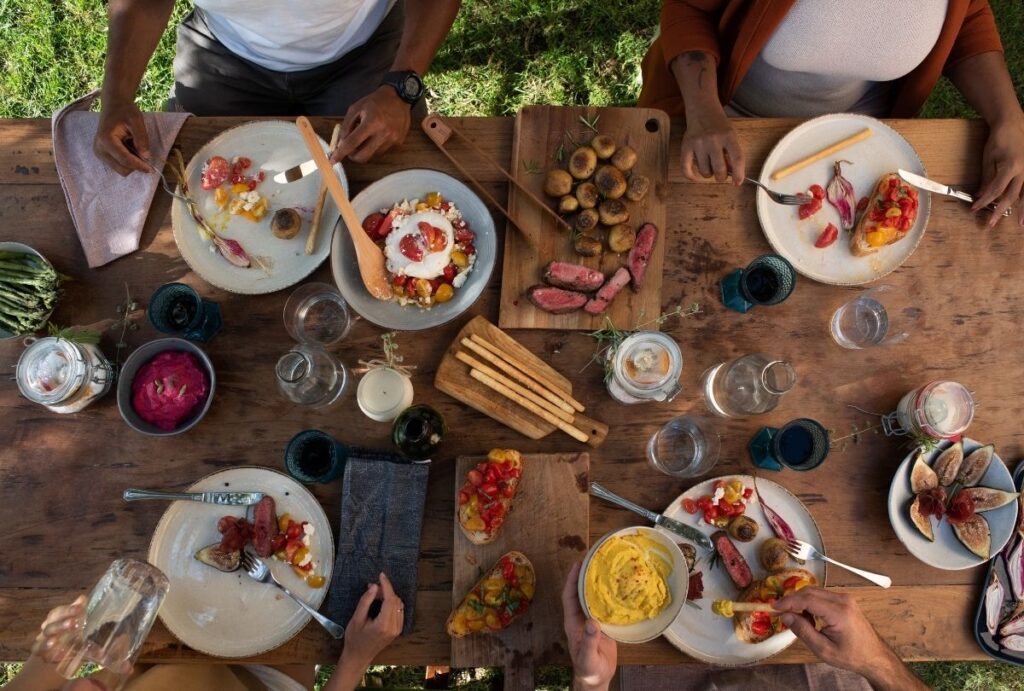
Teenagers are becoming more independent and may have busy schedules and an increasing interest in eating with friends. Rather than expecting every meal to be a family meal, look for realistic opportunities to connect over food.

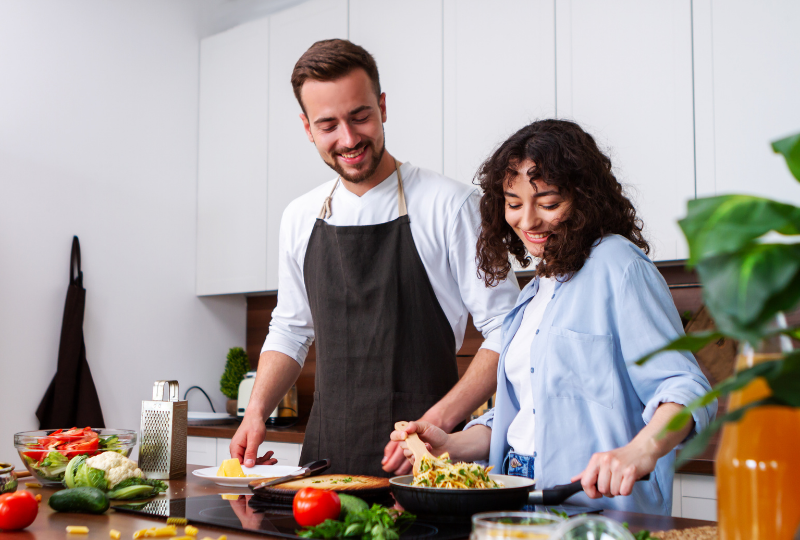
The focus doesn’t have to be on sitting down for a formal meal. Preparing, eating and talking about food together can all create connection.

Start by:

Give your teen a role

As your teen gets older, give them opportunities to participate in and take ownership of these traditions. They could:

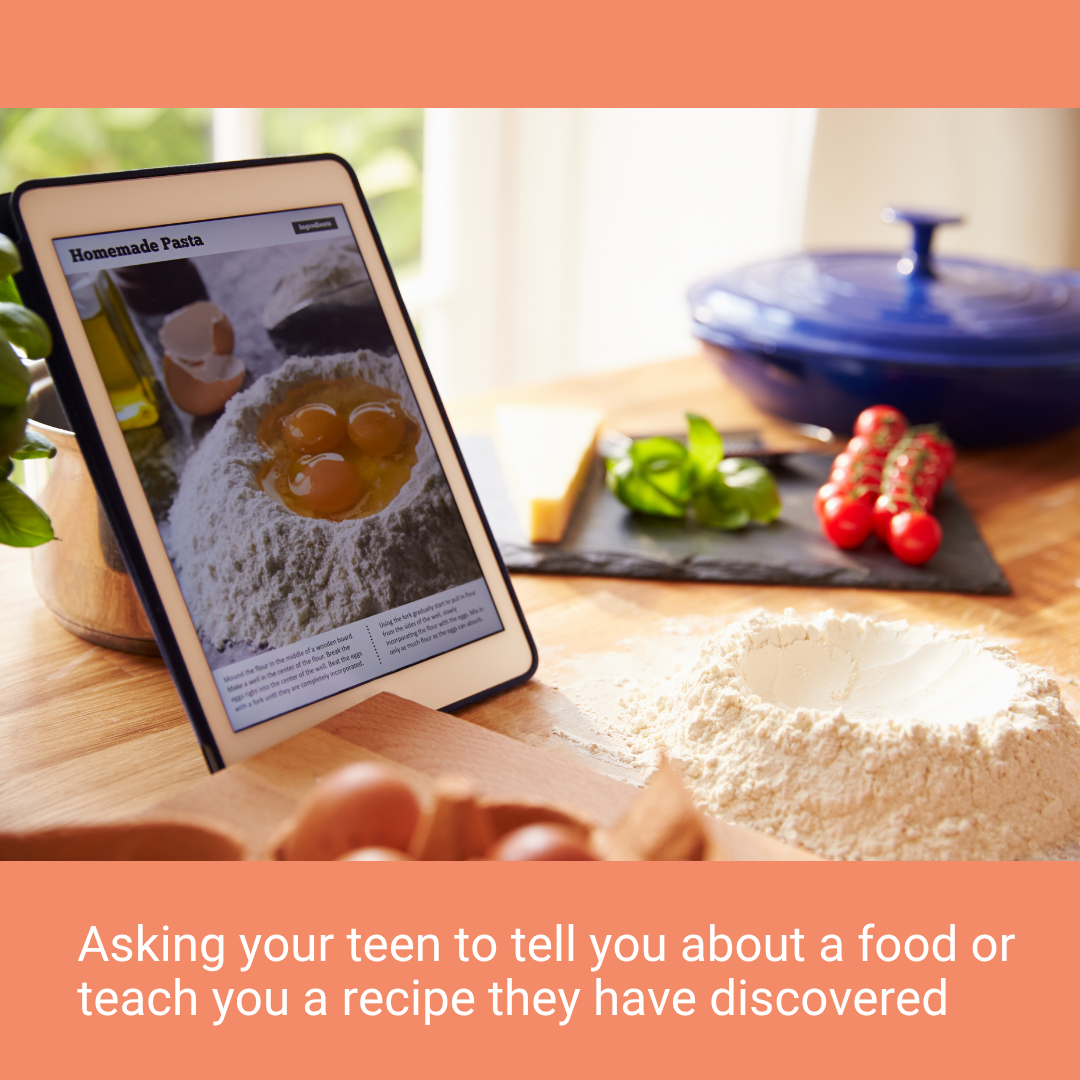
  • Learn to cook a favourite family recipe
  • Interview grandparents or relatives about traditional meals they grew up with
  • Create a new family food tradition such as ‘taco Tuesdays’ or ‘after-sport smoothie bowls’
  • Share a food or help prepare a dish from another culture with the family
  • Prepare part of a celebration meal, decorate the table and choose the music

These experiences build practical food skills while strengthening connections between generations.

By creating opportunities to cook, eat, celebrate and tell stories together, parents can help teenagers build food memories that connect them with their family, culture and community, while giving them the freedom to develop their own relationship with food.

For more ideas, check out love how you eat 

Recipes

Try some recipes with your teen from our Healthy Eating Hub

Helping teens navigate nutrition advice online

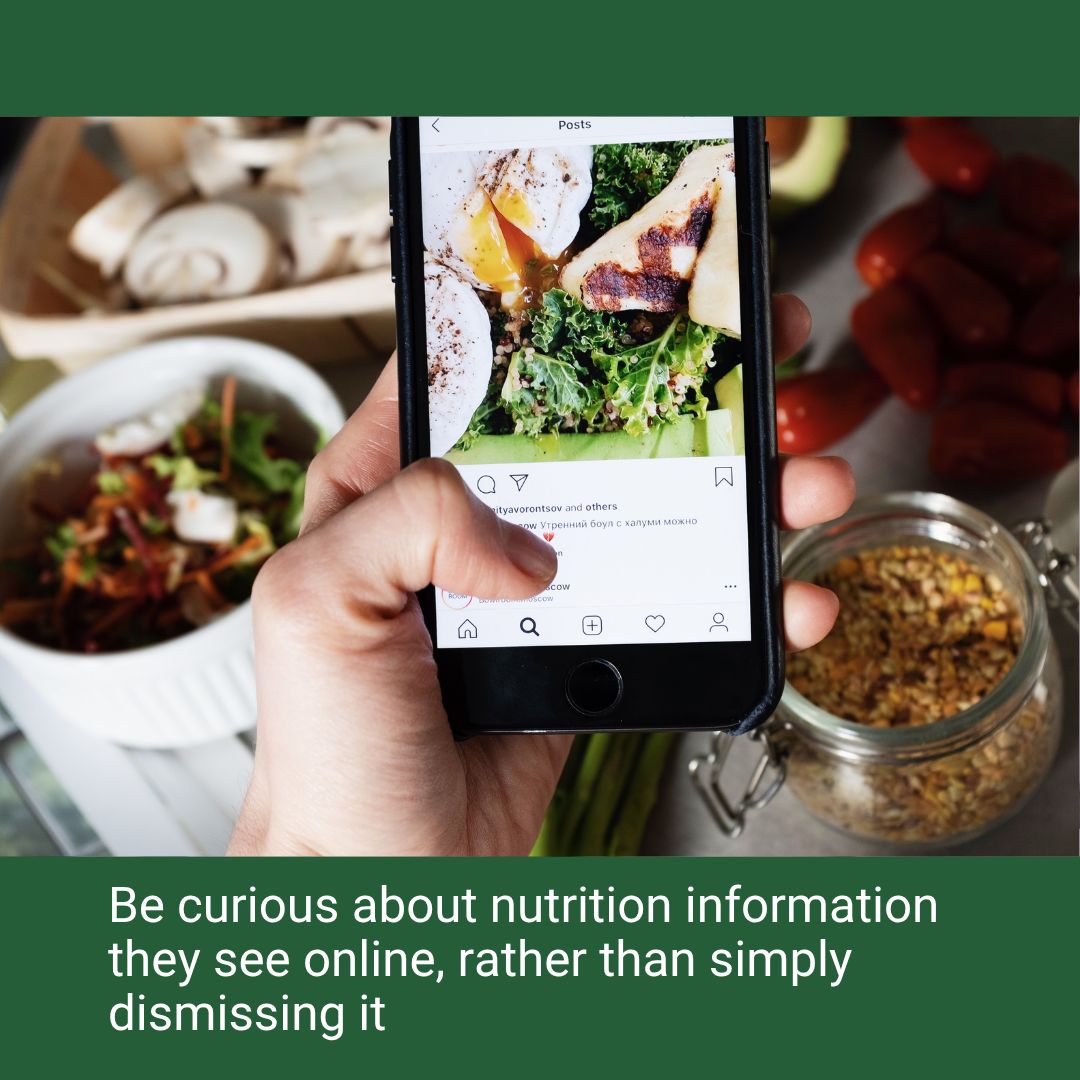
Recent research has shown that two thirds of teens get health information from social media, with the leading topics being diet and fitness.1 Today’s teens are constantly navigating through sponsored content disguised as nutrition information from a range of sources promoting a myriad of supplements and fad diets. This stream of misinformation has affected the way teens think about food.

The good news is that parents were still the main source of health information for 65% of teens surveyed.1 Parents can engage their teen in conversation around nutrition misinformation and how to critically evaluate nutrition claims.

  • Seek support from a GP or qualified health professional if you are concerned or need additional support.

How can I help as a parent?

References

  1. Royal Children’s Hospital Melbourne, 2025. A teen perspective: health messages and social media. Royal Children’s Hospital National Child Health Poll. RCH National Child Health Poll
  2. Royal Children’s Hospital Melbourne, 2026. Teens and food: do they know the facts? Royal Children’s Hospital National Child Health Poll. RCH National Child Health Poll
  3. Uhlmann, K, Ross, H, Buckley, L, Lin, B, 2023. Food in my life: How Australian adolescents perceive and experience their foodscape, Appetite, Vol.190. https://doi.org/10.1016/j.appet.2023.107034.
Site by Sod