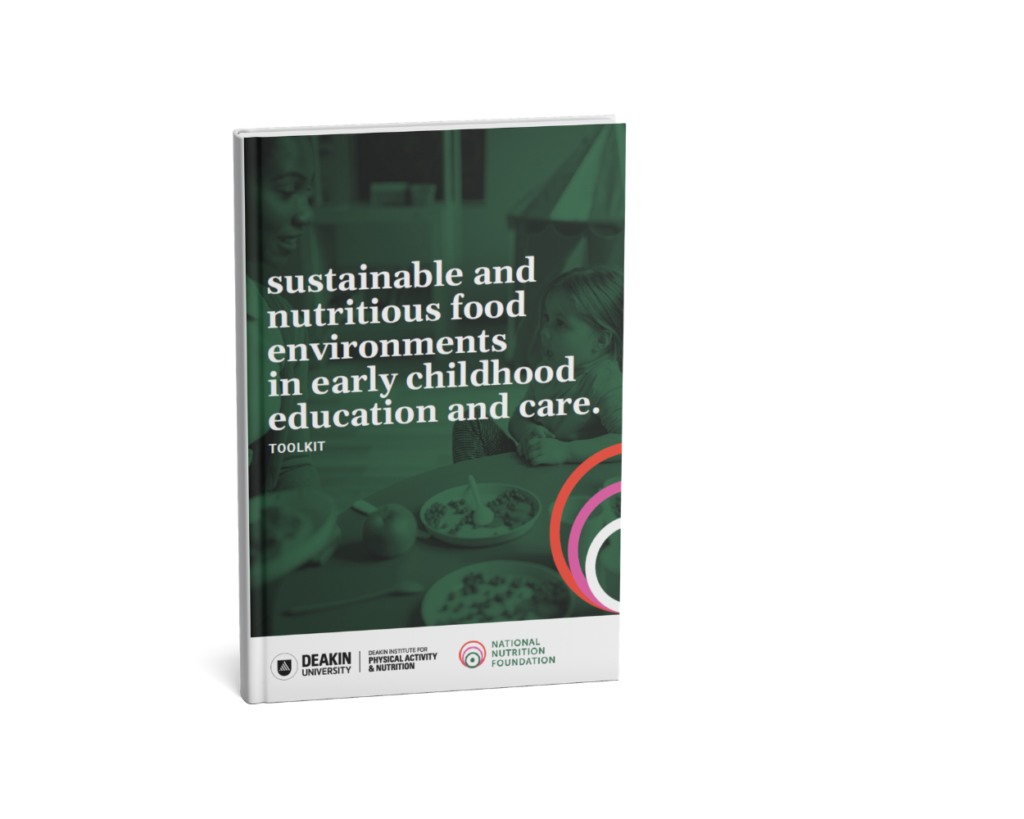
A free, practical toolkit to help early childhood education and care services create more sustainable and nutritious food environments.
Developed through a partnership between the Deakin Institute for Physical Activity and Nutrition (IPAN) and the National Nutrition Foundation, this toolkit supports early childhood education and care (ECEC) services to implement practical, evidence-informed sustainability practices.
Designed for service directors, cooks and educators, the toolkit provides guidance and achievable whole service strategies to help embed sustainable food and mealtime practices into everyday service operations.
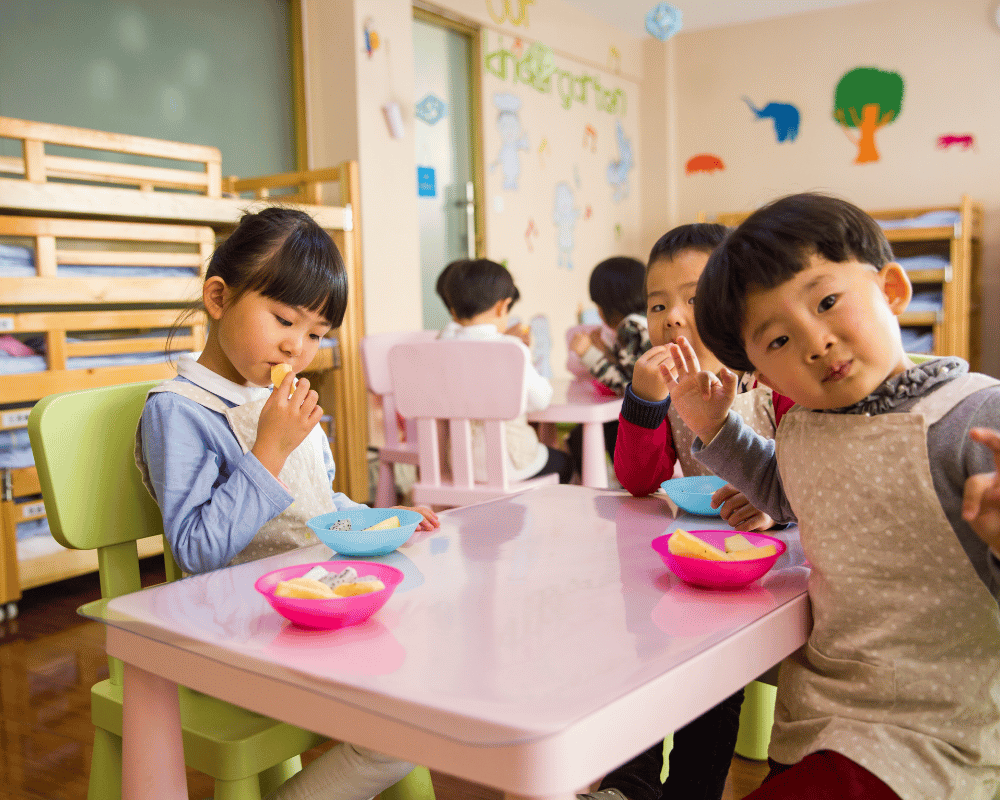
Early childhood education and care services play an important role in shaping children’s food experiences and supporting more sustainable food systems.
With hundreds of thousands of Australian children attending ECEC, the food that services purchase, prepare, serve and sometimes waste has a significant impact.


Australian children aged 0-5 years attend ECEC
daily nutrition provided in childcare hours

of food purchased may be wasted
This toolkit provides achievable strategies to help services strengthen sustainable food and mealtime practices in ways that suit their setting.
Explore the key components of sustainable nutrition and food environments in ECEC, and why they matter.
This toolkit combines current research evidence with the knowledge and experience of the people working in ECEC services every day.
It was co-designed with service directors, cooks and educators, then evaluated through an implementation pilot with ECEC services.
Feedback from participating services helped strengthen and refine the resource and demonstrated its potential to support sustainable food and mealtime practices in everyday settings.
The result is a practical, evidence-informed toolkit developed, tested and refined for use in ECEC.
Sustainability is a recognised principle within the Early Years Learning Framework, which encourages children to develop social responsibility and respect for the environment.
The National Quality Standard also embeds environmental responsibility within Quality Area 3, encouraging services to use resources efficiently and care for the environment.
This toolkit can help services translate these principles into practical action. Use it to support staff planning, inform your Quality Improvement Plan, explore sustainability through learning experiences or engage children and families in food and environmental activities.
Small, achievable changes can help build more sustainable practices across your service.
Explore practical, evidence-informed strategies to support sustainable food and mealtime practices in your early childhood service.